
A Kosher Kitchen Design Challenge in a Small Apartment in Netanya
Updated: Mar 18
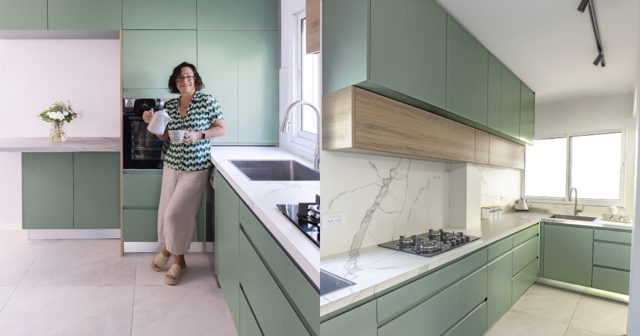
I recently completed a kosher kitchen design for a lovely couple living in an apartment in Netanya. Their brief was quite ambitious: they wanted to include double ovens, two sinks, a washing machine, and a tumble dryer, all within the kitchen space. In many Israeli apartments, kitchens are not very large, so fitting in all these appliances while still maintaining a practical layout was definitely a design challenge.
Because this was a kosher kitchen, careful planning was essential. The layout needed to allow for the separation of meat and dairy, which meant incorporating two sinks and clearly defined work areas. At the same time, the clients wanted all the appliances to fit comfortably without the kitchen feeling overcrowded.
Adding an additional sink in a kosher kitchen is not only a design consideration but also a practical one. A second sink usually requires additional plumbing, and if plumbing needs to be moved or extended, it can increase the cost of the renovation. When a builder prepares a price proposal, changes to plumbing are often one of the factors that can raise the overall cost. It is important to consider these details early in the planning stage so there are no surprises later in the renovation process.
With thoughtful design and detailed planning, we were able to make it work. The washing machine and tumble dryer were placed inside a cupboard and stacked one above the other, which saved valuable floor space. Next to this cupboard we managed to fit a very slim pull-out unit with shelves, perfect for storing washing powder and laundry products. Between the washing machine and tumble dryer we also incorporated a pull-out shelf, which can be used for folding laundry. These small details can make everyday tasks much easier and show how important good design and planning really are.
The original plan was to have one oven positioned above the other, which is often a practical way to save space in a kosher kitchen. However, once the plans were completed, I realised that we could actually fit two separate ovens in different areas of the kitchen. This allowed each oven to be installed at a more ideal height, making them more comfortable and practical to use. However, stacking ovens requires careful consideration. The bottom oven has to installed lower than the standard height to enable the upper oven above to not sit too high to reach. The lower oven can be uncomfortable to use and may cause back strain when bending down to access it. Finding the right balance between comfort and practicality becomes an important part of the design. Planning an oven on top of another oven is often more complex than it first appears.
Planning is truly the most important part of any kitchen design, especially when working with limited space. I design my kitchens using AutoCAD, which allows me to move elements around, test different layouts, and ensure that all the dimensions work perfectly before the project begins. This process helps avoid mistakes and ensures that every centimetre of the kitchen is used efficiently.
After completing the technical planning in AutoCAD, I also created the kitchen in SketchUp, which is a three-dimensional design software. This allows clients to clearly visualise how their kitchen will look before the renovation begins. Many people find it difficult to imagine a space just from technical drawings, so a 3D model helps bring the design to life and gives a much clearer sense of the final result.
The result was a kitchen that is both practical and beautifully organised, and most importantly, the clients are delighted with the final design.
If you are planning a kosher kitchen, working with an interior designer who understands layout, functionality, and careful planning can make a huge difference. A well-designed kitchen should not only look beautiful, but it should also function smoothly for everyday life.


Comments